

Description
Latin Name: Rhagoletis mendax
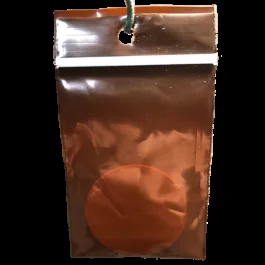
Lure: 1.4 mil PE Pouch
Lure Active Ingredient: Ammonium Carbonate
Field Life: 12 weeks
Trap to Use: Yellow Sticky Card
Monitoring Strategy: Hang traps between knee and waist level. Traps should be placed near fruit in the shady part of the plant. Use 2 to 4 traps per acre. Check with Cooperative Extension or Master Gardener for local information and recommendations.
Cultural and Physical Control: Sites where there are large bushes that provide shade for much of the day seem to be preferred by blueberry maggots.
Distribution: North America; primarily northeastern and north central United States as well as Canada.
Hosts: Various species of blueberry, huckleberry, lingonberry and dangleberry.
: Adults: Adults have a length of 3 to 4 mm. They are black with a white spot at the tip and a white stripe along each side; abdomen with fine white bands separating segments; wing length 3 to 4 mm, with conspicuous black bands.
Larvae: White, 5 to 6 mm in length.
Eggs: White and elongated.
Life Cycle: Blueberry maggots overwinter as pupae in the soil. Adults will appear late spring to early summer depending on temperature. Adults have a pre-reproductive period of one to two weeks. Females produce 25 to 100 eggs over a period of 15 to 30 days. Larvae feed in the fruit pulp for period up to 3 weeks. After feeding, the larvae drop to the ground, enter the soil, and pupate several centimeters below the surface. In northern states, most pupae overwinter only until the following season, but some pupae may remain in the soil for up to five years before metamorphosing to the adult stage.

Reviews
There are no reviews yet.